Company · August 26, 2026 · 12 min read
Campus Community Hits Different
Inside ETAPX campus culture: how four product teams share one Bay Area floor, the traditions nobody planned, and why in-person community shapes what we ship.
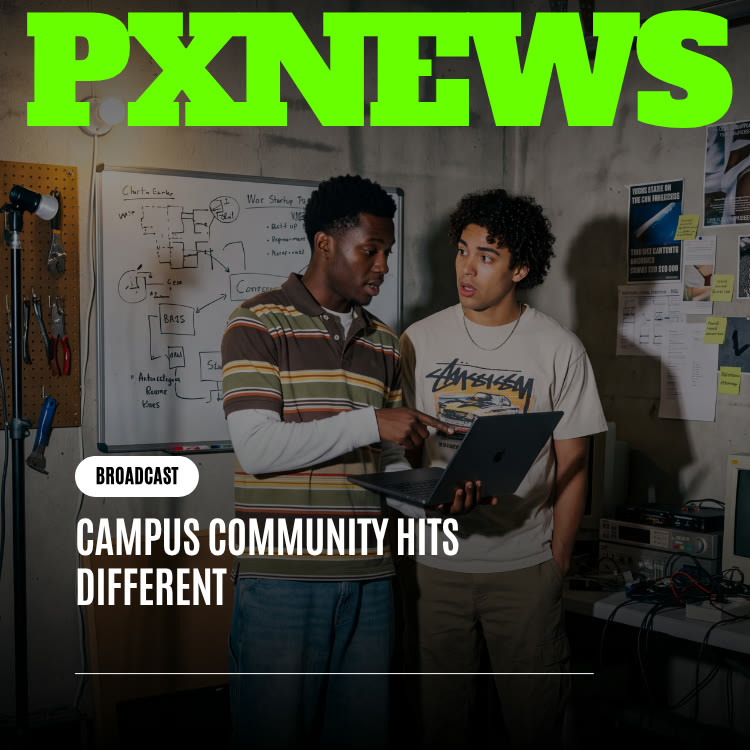
ETAPX's campus culture comes down to one idea: put people building different products in the same space and let the useful accidents happen. The Whistlr, GLSRM, Ocsidian, and Influxx teams share a Bay Area floor, a kitchen, and a set of traditions nobody formally designed, and that closeness influences the products more than any planning document could. This is a look at what that community feels like day to day, what it produces, and what businesses and creators on Whistlr get out of it.
What "Campus" Really Means at ETAPX
When people hear the word campus, they tend to picture buildings. That is not what we mean, and it is not something we describe publicly anyway. We are not going to share floor plans, entry details, or anything resembling a map. The campus worth describing is the human layer: a kitchen everyone uses, lounge spaces, the habits that formed without anyone asking for them, and the store that grew out of in-jokes.
ETAPX belongs to the Bay Area in the way that actually shapes daily life, not just as a line on a profile. Mornings that start grey and clear up by mid-morning. People who disappear for a run and come back forty minutes later with a new idea. A shared expectation that if you feel strongly about something, you will say so out loud before you write it down. For more on our roots, read why the Bay Area became our home turf.
Four Product Teams With Four Different Rhythms
ETAPX is not one product team dressed up as a company. It is four distinct products, each with its own audience and its own roadmap, sharing a single floor. That mix gives the place its own internal weather.
- Whistlr: The team runs on the platform's own clock. Minis, Waves, and live streams on Flow are active somewhere at every hour, so there is a steady background buzz about whatever is happening on the platform right now.
- Influxx and GLSRM: These teams tend toward a research rhythm, with long quiet stretches of focused work broken up by someone standing up quickly because a run just finished.
- Ocsidian: The newest and smallest team brings the most energy per person. Tiny groups working on something fresh are usually louder, quicker to debate, and quicker to cheer.
Nobody wrote a memo defining how each team should behave. These rhythms grew from years of people who care about adjacent problems working in the same place. The Bay Area instinct to solve things out loud at a whiteboard rather than filing a ticket and waiting runs through all of it.
Unplanned Conversations as a Way of Working
Ask people here about the most valuable meeting format and many of them will describe something that is not a meeting at all. It is the unscheduled conversation that starts because two people from different teams ended up in the kitchen at the same time with a problem on their minds. Sometimes it lasts five minutes. Sometimes it eats most of an afternoon.
These moments matter more at a multi-product company than at a single-product one. Left completely separate, four teams with four roadmaps could easily drift into four private companies under one roof, each speaking its own dialect with its own blind spots. The thing that prevents that is not a committee. It is the fact that an engineer working on one product's infrastructure regularly eats lunch next to someone building a completely different product, and both end up with opinions about each other's work.
What These Collisions Actually Produce
It is easy to romanticize hallway talk, so here is what it concretely delivers:
- Shared tools surface sooner: More than one internal tool now serving both Whistlr and Influxx started with someone overhearing a complaint about a problem they had already partly solved.
- Design stays consistent: Designers across the products sit close enough to notice when their work starts to drift apart and correct it without a formal mandate.
- Bugs get solved from the side: A person on a different team spots a familiar symptom from a past fight, and a fix that could have taken a day lands in a fraction of the time.
- Candidates see the real thing: People who visit during hiring consistently say the floor felt like one company with several accents rather than several teams sharing a lease.
- Good weeks spread: When one team is winning, the energy is visible on the floor and tends to lift whoever sits nearby.
Traditions That Started Without a Plan
A reliable test for whether something is a real tradition: nobody can find the memo that started it. A few have lasted long enough that the place would feel strange without them.
The Release Bell
At some point someone put a plain desk bell, the kind you might see at a hotel reception counter, near the lounge with a scribbled note asking people to ring it whenever something ships. Who did it is still a matter of friendly dispute. When a release goes out, someone rings it, and for a few seconds every head on the floor turns. It is one of the rare moments each week when every team is focused on one thing together, even if that thing is a small update to another team's product.
Demo Friday
Late on Friday afternoons, anyone with something to show, whether a feature, a prototype, or a broken build that is funny precisely because it is broken, can take a few minutes in front of whoever is around. Nobody signs up and nobody builds slides. The bar is low on purpose, and plenty of what gets shown will never ship. That is fine. The point is a weekly, low-pressure window into other teams' current work, and it reliably sparks ideas that cross team lines.
The Open Whiteboard
A wall near the kitchen works as a whiteboard anyone can use for anything except official planning. Rough sketches of features nobody owns yet. A deeply unserious leaderboard for the strangest bug of the month. A long, increasingly enthusiastic diagram explaining how Halo's ambient presence works to a designer who only asked a quick question. It gets wiped and redrawn constantly, which is exactly the point.
The Campus Store and the In-Jokes People Wear
The Campus Store, where ETAPX sells its official apparel, borrows its name from Campus, the community's longtime Discord server. It was not conceived as a marketing add-on. It came from the same instinct behind the bell and Demo Friday: offering people a tangible way to show they are part of this.
Several designs started as jokes on the floor before they were ever printed. HoneyStack is the best example: insiders know exactly what it refers to, and everyone else draws a blank. Watching a new hire ask what it means, get half an answer, and spend a week piecing together the rest has become its own informal welcome. It is also common to see the gear worn around the office, which says the clothes feel like identity to the people closest to them rather than advertising.
The products are the public face of ETAPX. The bell, the wall, and the Friday demos are the reasons those products turn out the way they do.
Rituals That Keep Everyone Honest
If traditions are the unplanned fun, rituals are the deliberate habits the floor would miss if they stopped.
All-hands meetings happen often enough to be a real touchpoint instead of a box to tick. AJ, ETAPX's founder and CEO, tends to run them as a candid conversation about what is and is not working in each product, struggling parts included. That openness is intentional: a company that only shares good news in public eventually stops believing its own good news. You can learn more about his approach in our profile of AJ.
Onboarding has an unofficial layer too. New hires, whichever product they join, spend part of their first week out in the shared lounge areas. No schedule requires it. Veterans have learned that people who stay inside their own team bubble miss the wider instincts that make those unplanned conversations pay off.
How Being in the Same Room Shapes What Ships
You could file all of this under morale. We think it does more than that, and Halo is the clearest example. Halo, Whistlr's ambient presence feature, grew partly out of a common-area argument about what it feels like to sense that someone is around without either person announcing it, the way you notice a friend nearby in a shared space rather than seeing a green "online" dot. That kind of feeling is hard to capture in a written spec. It is much easier to debate and refine when the people debating it are sharing a space and experiencing that exact sensation while they build it. Read more about how Halo has grown in popularity.
Smaller versions of this happen across every product. Engineers can sit with the people using their tools and spot friction that never reaches a support ticket. Interface decisions get questioned early by colleagues from other teams who have no attachment to a particular design and will say so before it ships. An office is not strictly required for any of it, but having one speeds it up and makes it more candid.
This is not nostalgia, and it is not a claim that sharing a desk is the sole path to great software. Plenty of great products come from distributed teams, and some people at ETAPX work that way too. Our point is narrower: four ambitious products that need to stay consistent with each other without merging into one team benefit from shared space, because the cost of staying aligned drops every time someone can turn around and ask a question instead of booking a meeting days out.
What Campus Culture Means for Businesses and Creators on Whistlr
If you run a business or build an audience on Whistlr, the culture on our floor shows up in your experience more directly than you might expect.
- A more consistent product: Designers and engineers who sit together keep tools like Business Suite, Ads Manager, and your Whistlr GO storefront feeling like parts of one system rather than separate apps bolted together.
- Faster problem-solving: When an issue touches more than one part of the platform, the people who can fix it are often a few desks apart.
- Ideas that cross products: Thinking developed for one ETAPX product regularly informs another, which means features for creators and businesses benefit from a wider pool of experience.
- Honest priorities: A culture that talks openly about what is not working yet is more likely to fix the rough edges you run into instead of glossing over them.
To keep up with the community, follow along on Whistlr itself and on the PX Campus news hub, where we share product updates and stories like this one.
Ideas You Can Borrow for Your Own Team
You do not need a campus to apply what works here. Whether you run a small shop on Whistlr GO or a creator business with a few collaborators, these habits translate:
- Mark your launches: Pick a small, shared signal for when something ships, even a message in a group chat. Celebrating releases together keeps everyone aware of progress.
- Hold a low-stakes show-and-tell: Set aside a few minutes each week for people to share works in progress. Keep the bar low so unfinished ideas get airtime.
- Keep a scratch space: A shared board, physical or digital, where anyone can sketch half-formed ideas helps those ideas find each other.
- Share the bad news too: Regular, candid updates that include what is not working build more trust than polished highlights.
- Mix people on purpose: Give new collaborators time with people outside their immediate role so they learn how the whole operation fits together.
The People Who Keep the Culture Alive
None of this runs on autopilot, even when it looks effortless. As a company grows, the edges of its culture can get worn down without anyone noticing. Someone has to notice the culture taking shape and guard whatever is allowing it to grow.
At ETAPX, that work is spread across product leaders and the people team, and much of it looks minor written down: keeping the lounge stocked, protecting Demo Friday as the company grows, and spotting a new hire who has not found their crowd yet so it can be addressed early. Some leaders here describe the experience of building together as a second product that no roadmap lists but that keeps influencing the first. For a wider look at how we think about this, see embracing culture at ETAPX.
Ask people across the four teams about their favorite part of working here and very few name a feature. They talk about a particular Friday, a hallway debate that became a real feature, the bell, the wall, or the colleagues nearby whose judgment they now rely on.
Frequently Asked Questions
What is ETAPX campus culture like?
It centers on four teams, building Whistlr, GLSRM, Ocsidian, and Influxx, that share one Bay Area floor. Unplanned conversations, informal traditions like a release bell and Demo Friday, and candid all-hands meetings shape how people work together.
Do the Whistlr, GLSRM, Ocsidian, and Influxx teams work together?
Each team has its own roadmap and rhythm, so they are not merged. Because they share space, though, they collaborate informally all the time, sharing infrastructure, keeping design consistent, and trading ideas that come from proximity rather than formal process.
Does ETAPX allow remote work?
Yes. Plenty of strong work at ETAPX is done away from the office, and we do not see in-person work as the only route to good software. Shared space simply helps four distinct products stay consistent with one another.
What is the Campus Store?
The Campus Store sells official ETAPX apparel. It borrows its name from Campus, our community Discord server. Several of its designs, such as HoneyStack, started as in-jokes on the office floor.
Can the public visit the ETAPX campus or attend Demo Friday?
We keep details about office access out of public posts for safety and privacy. The best ways to stay connected are Whistlr itself, the PX Campus news hub, and the Campus community on Discord.
How does company culture affect Whistlr users?
Teams that sit together tend to build more consistent products and solve cross-platform issues faster. For creators and businesses on Whistlr, that shows up as tools that fit together and fixes that do not stall between teams.
You cannot put a release bell or a Friday demo on a roadmap, which is exactly why they are worth writing about. The products are what everyone sees. The community behind them is what makes them feel the way they do.